
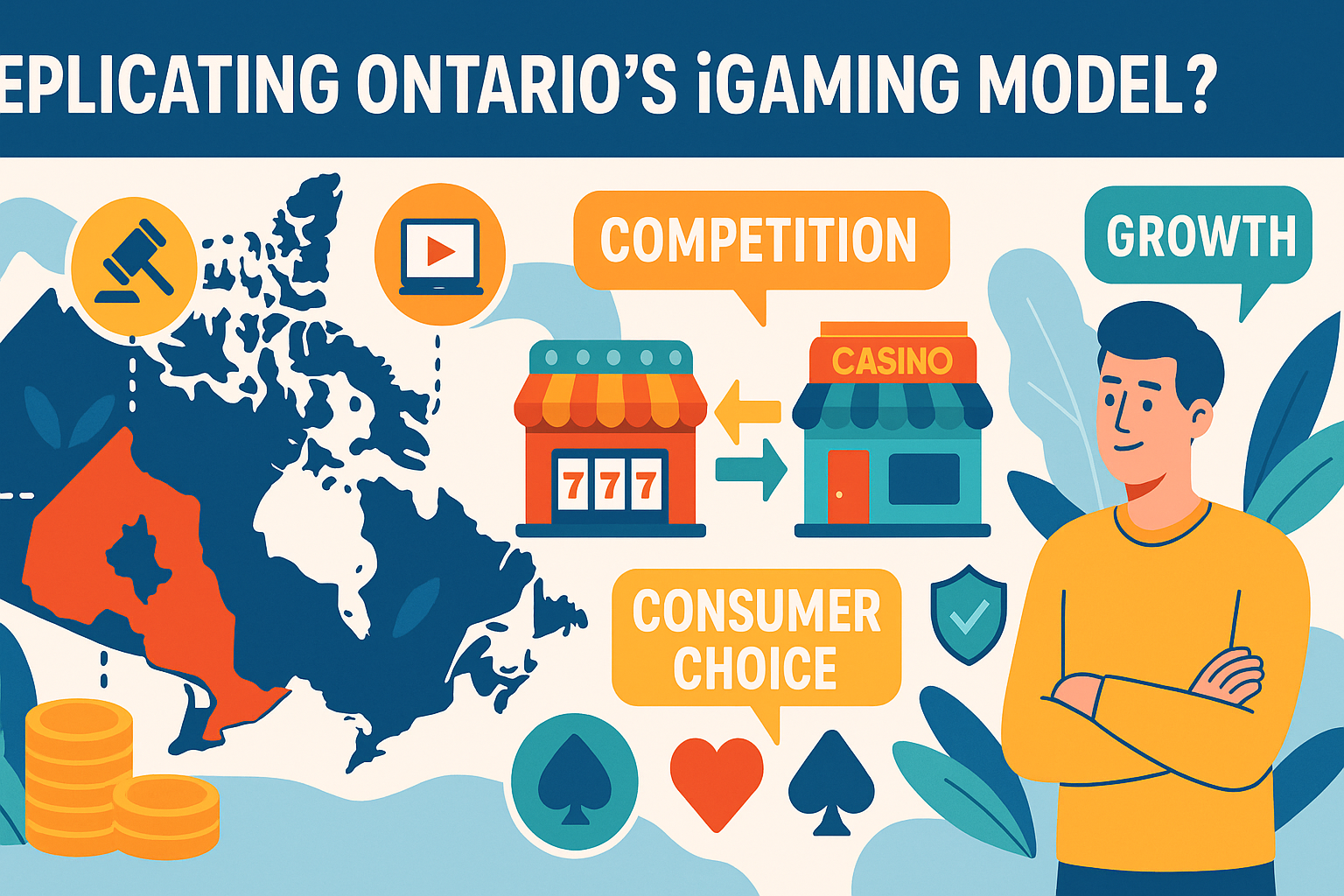
Ontario made history by becoming the first province in Canada to open up its iGaming market to competition. Since then, another region—Alberta—has also chosen to shift toward a more open framework for online gambling. But elsewhere across the country, progress has remained slow, with most provinces still operating under government-run or monopoly-style models.
The Monopoly Model’s Limitations
The traditional model, where the state is the only legal provider of online gaming, is losing ground—not just in Canada, but globally. Critics argue that monopolies limit consumer choice and fail to address the growing presence of unregulated operators. This makes it difficult to protect players and enforce fair standards across the board.
Industry Voices Call for Change
Leaders within the Canadian gaming sector argue that the so-called “monopoly” never really existed due to the massive influence of offshore operators. Canadians have had access to international sites for decades, and many have preferred those platforms over the limited options provided by provincial monopolies.
The suggestion is simple: provinces already have the tools to regulate; they just need the political will to act. Provinces like British Columbia and Quebec are rumored to be reviewing Ontario’s framework as a model.
A Solid Foundation for Growth
Canada has long had the right conditions for iGaming success: fast internet, wide mobile adoption, and familiarity with digital payments. These factors made it easy for offshore operators to gain a foothold in the past—but they also set the stage for regulated operators to succeed.
When Ontario opened its market, it wasn’t starting from zero—it simply formalized what was already happening. And it worked: within two years, the province’s regulated market generated billions in revenue and showed strong growth.
Lessons for Alberta and Beyond
Alberta is taking notes. It’s building a similar framework and focusing on encouraging existing offshore operators to join the regulated market. By offering fair conditions and strong consumer protections, Alberta hopes to mirror Ontario’s success—possibly improving on areas like compliance burden and technical reporting.
However, Alberta’s own government-run site, PlayAlberta, has its challenges. It accounts for a fraction of the total market, which remains dominated by unregulated providers. But with recent upgrades and an improved product offering, the platform is better positioned to compete in the open market.
Reality of Competition
Experience shows that when state-run platforms are forced to compete, they improve. This pattern isn’t unique to Canada; Finland, for example, is currently overhauling its own state operator ahead of its market liberalization in 2027.
In Alberta, PlayAlberta has already expanded its product offerings and is expected to leverage its brand to compete more effectively when the market fully opens.
Balancing Regulation and Incentives
Ontario, even with strict marketing rules, has achieved an 84% channelisation rate—meaning most online players are using regulated platforms. Still, some users are lured to unlicensed sites offering better bonuses. Alberta, which is still shaping its rules, is expected to launch its open market in early 2026.
Regulators are considering how best to balance protection with flexibility, especially as consumer behaviors evolve. There’s broad agreement that restrictions must not push users into riskier, unregulated markets.
🇺🇸 External Pressure from the US
Complicating the situation is economic friction with the US. Recent threats of tariffs have led to delays and procurement challenges for gaming terminals in Canada. Some provinces temporarily stopped buying American machines and have since shifted toward local or alternative sources.
While the tensions have cooled slightly, the message is clear: Canada’s gaming industry is adjusting its supply chains and becoming more self-reliant, especially in light of unpredictable trade relations with its southern neighbor.
Looking Ahead
Momentum is building. Ontario and Alberta have demonstrated that a well-regulated, competitive market is not only viable—it’s profitable and sustainable. Other provinces are watching closely, and early discussions suggest more may join the movement toward regulation soon.
The path forward isn’t without obstacles, but the groundwork is in place. With consumer demand, international competition, and industry pressure all pointing in the same direction, a more unified and open iGaming market across Canada may not be far off.