
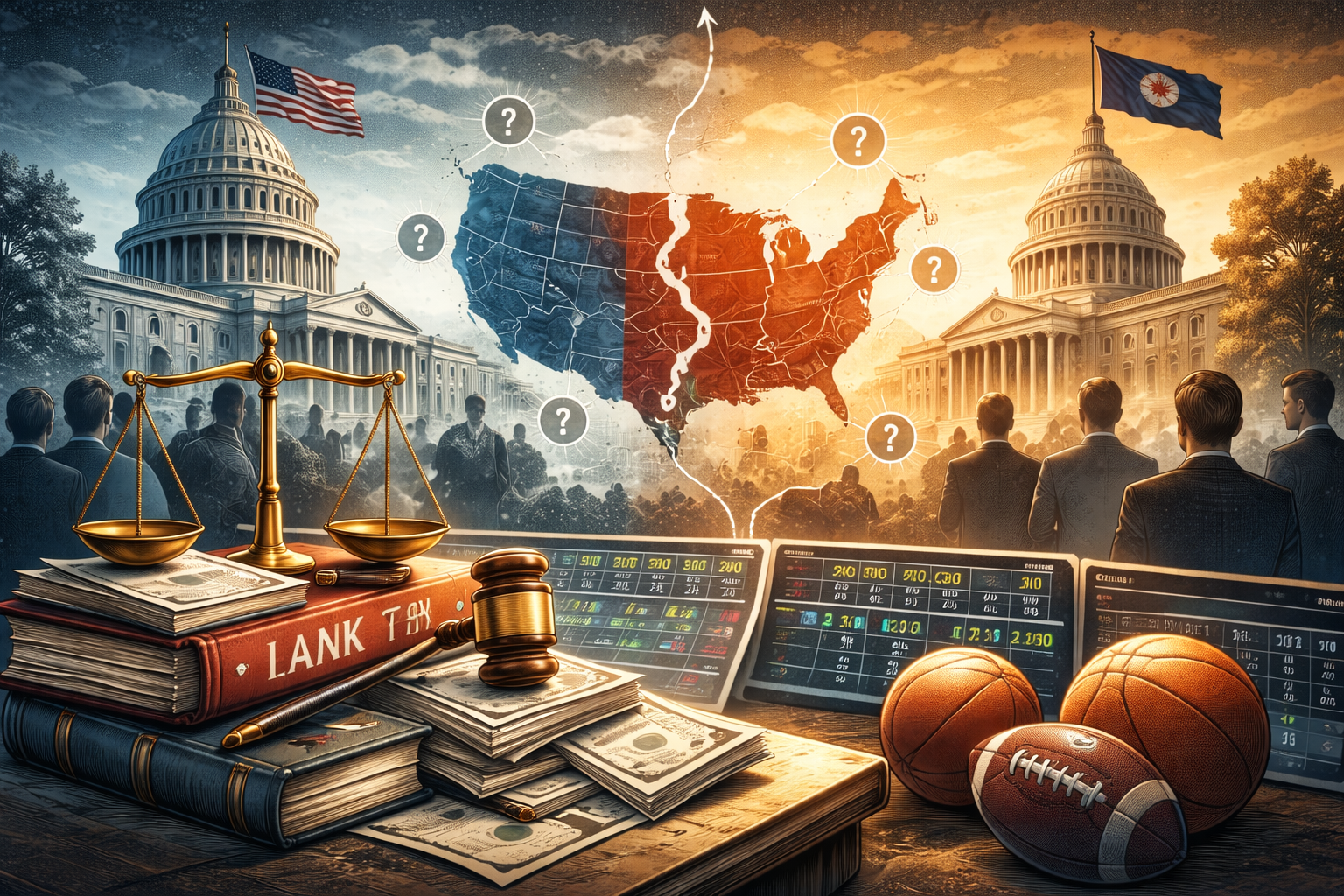
Efforts by US state lawmakers to control or prohibit prediction markets are accelerating in 2026, but many observers across the gambling industry doubt whether those initiatives can achieve meaningful results without clarity at the federal level.
Across the country, legislators are moving in different directions. Some states are exploring taxation and licensing models, while others are attempting outright bans or age restrictions. Yet prediction market operators maintain that their products fall under federal commodities law, setting up a direct conflict between state authority and national oversight.
At the heart of the debate is whether platforms offering contracts tied to sporting outcomes are conducting gambling or trading federally regulated financial instruments.
Patchwork of State Proposals
Several jurisdictions have become active battlegrounds.
Lawmakers in Iowa and New York have introduced measures aimed at bringing prediction markets into formal regulatory systems, including potential licensing requirements and taxation. Meanwhile, proposals in Hawaii and Illinois would restrict or block certain offerings, particularly sports-related contracts. In Connecticut, Governor Ned Lamont has suggested prohibiting individuals under 21 from participating.
These actions are unfolding as regulators in multiple states pursue litigation against platforms such as Kalshi, arguing that the companies are effectively providing unlicensed sports betting.
Prediction market operators disagree. They insist their products are governed by the Commodity Exchange Act and supervised by the Commodity Futures Trading Commission (CFTC), meaning federal authority overrides state intervention.
Skepticism From Industry Analysts
Despite the flurry of legislative activity, many industry insiders believe state efforts may ultimately have limited impact.
Analysts argue that even if a state passes a ban or creates a regulatory structure, operators will likely challenge those laws in court and continue operating under the claim of federal preemption. In practice, that would extend legal disputes rather than resolve them.
Some observers have gone further, suggesting that unless Congress amends federal law, prediction markets have little incentive to adapt to individual state demands.
Pressure Builds in Washington
Real change, critics say, would require congressional action. Nevada Representative Dina Titus recently introduced the Fair Markets and Sports Integrity Act, which seeks to modify federal commodities law to ensure prediction markets cannot bypass state gaming frameworks.
Tribal leaders have echoed that view, arguing that gambling policy decisions should remain in the hands of states and sovereign tribal governments rather than technology platforms exploiting regulatory grey areas.
Still, federal reform is far from guaranteed, and the timeline remains uncertain.
The Preemption Debate
Legal opinions vary on the strength of the federal preemption argument. Some attorneys believe the claim is vulnerable but acknowledge it has so far proven effective in slowing state enforcement.
Another factor is the stance of the CFTC itself. New leadership at the agency has signaled potential support for prediction market operators while also promising to review how event contracts should be governed in the future.
Previous attempts to tighten restrictions on sports-related trading were never finalized, leaving the current environment legally ambiguous.
Courts Begin to Weigh In
While lawmakers debate, courts are starting to issue rulings. In Massachusetts, a judge recently granted a preliminary injunction after the state argued that the platform’s offerings closely resemble online gambling. Similar legal challenges have unfolded in Maryland and Nevada, with additional cases pending in other jurisdictions.
Some regulators are also exploring indirect pressure. One strategy could involve scrutinizing payment providers, suppliers, or licensed gambling partners that help prediction markets function, potentially threatening their broader regulatory standing.
Economic Tension With Sportsbooks
In major betting states, the issue is increasingly financial. Licensed sportsbooks often pay high tax rates, creating frustration among policymakers who see prediction markets operating without comparable obligations.
New York Senator Joe Addabbo has been particularly vocal, questioning whether it is fair for traditional operators to shoulder heavy fiscal burdens while alternative platforms capture similar wagering activity under a different legal classification.
For some lawmakers, the solution is not prohibition but regulation — bringing prediction markets into the system rather than trying to push them out.
Waiting for a Defining Moment
Ultimately, many experts believe the matter may be settled only after higher courts — potentially even the US Supreme Court — clarify the relationship between federal commodities law and state gambling authority.
Until then, state legislation may shape the conversation, but it is unlikely to deliver final answers.